

February 11, 2021
 That 2020 was a rough year for healthcare in Canada is news to no one. Over 20,000 Canadian COVID-19 deaths – over 15,000 in long-term care facilities specifically, at least 500,000 postponed medical interventions, and frontline workers pushed to the brink of exhaustion are just a few of the challenges. The last 12 months have tested our resolve, our patience and our resilience. This past annus horribilis also tested our political leaders, and in far too many cases they have been found wanting.
So, with a new year well underway, how can they do better?
First, right across the country we must ensure that we have the processes and resources ready to vaccinate every Canadian as soon as possible. Much has been made about the delayed deliveries of doses from vaccine manufacturers, but we are still within a timetable that Canadians deem acceptable for vaccine rollout, as proven by Abacus Data when they polled the public on this issue in December. However, when the manufacturers’ distribution kinks are resolved we must make sure we can get needles into arms as rapidly as possible, in a fair and equitable way, beginning with the most vulnerable.

Vaccine availability is the latest flashpoint in the decades-long jurisdictional squabbling between federal and provincial governments that has eroded the confidence of Canadians in their healthcare “system”. However, rhetoric must give way to action to support healthcare and public health in Canada. The federal government must step up and lead a truly collaborative effort with provinces and territories to build a healthcare system with agreed upon and measurable quality improvement targets. Improving healthcare by diktat does not work. Investment, collaboration and goal-setting does.
Yet, while the federal government must lead the collaborative charge, provincial and territorial governments must also set aside the belief that the health of Canadians is their exclusive domain. At the tail end of 2020, a HealthCareCAN poll found that nearly three quarters (74%) of respondents across political divides agreed the federal government should play a leadership role in healthcare, with quality and capacity being the top priority areas.

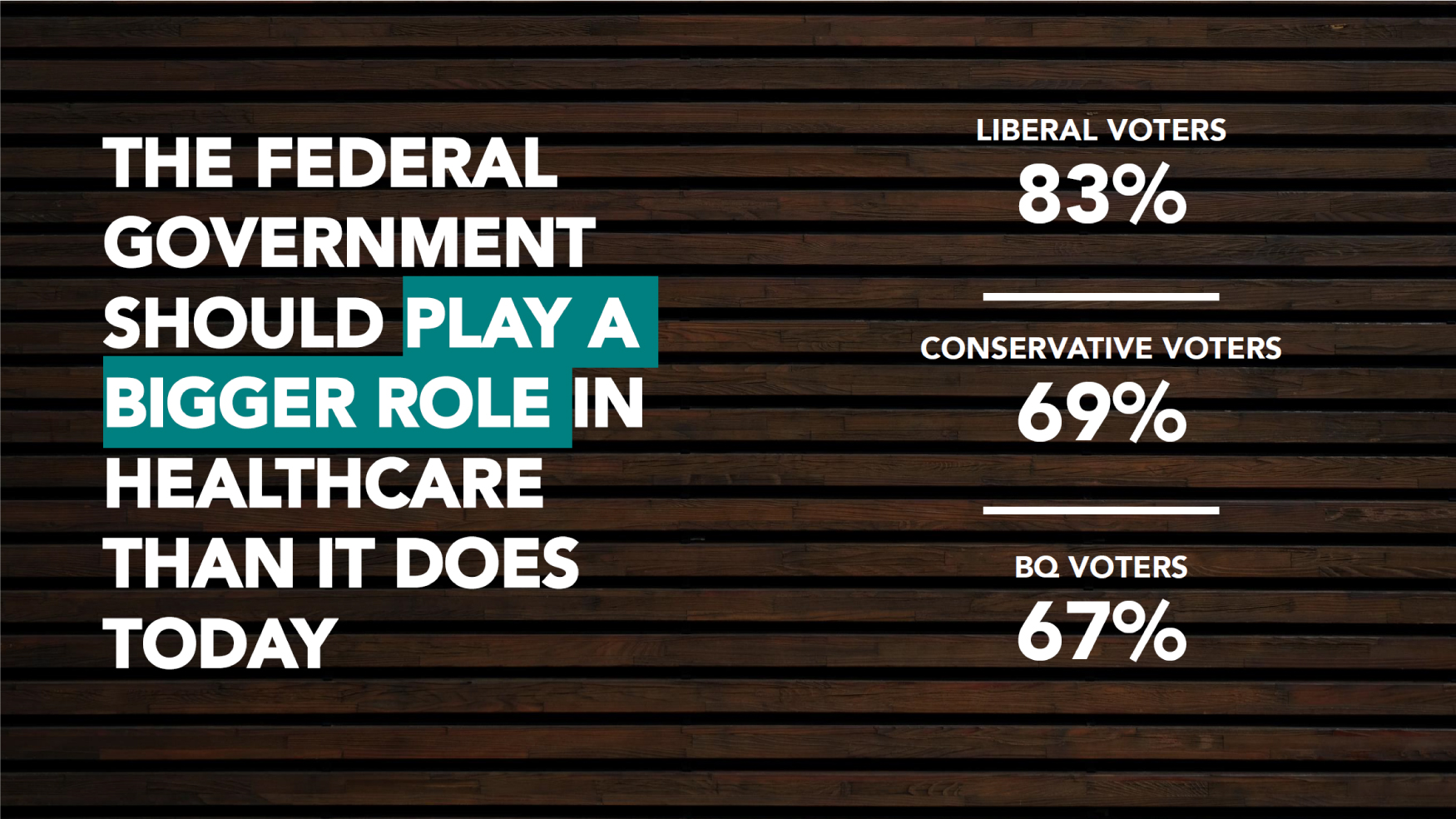

Further, 71% feel the pandemic has shown that our healthcare system is not properly resourced, is not the same in all parts of the country and needs major improvements now. Canadians want:
- Increased federal funding for hospitals. 80% of Canadians polled agreed the federal government should invest directly in hospitals to achieve national healthcare goals.
- National standards and guidelines. 77% of Canadians polled want national guidelines and standards for managing healthcare networks.
- A tax credit for frontline healthcare workers. 80% of Canadians polled said they would support a $3,000 federal tax credit for healthcare workers who make less than $100,000/yr.


These are concrete measures upon which the federal government could and should focus its spending power to support the healthcare system and improve the health of all Canadians. The federal government has already invested billions to address the economic fallout of the COVID-19 pandemic, but our health and long-term care workers, the elderly, the vulnerable and racialized communities continue to suffer.
COVID-19 is not the first pandemic we’ve faced, and it certainly won’t be the last. Our federal and provincial governments must set aside false jurisdictional pride and start taking this pandemic as a solemn opportunity to right the wrongs of the past. We must not fail to learn the terrible lessons bought and paid for with the lives of over 20,000 Canadians. Our political leaders owe it to them to do better and there is no time to waste.
Paul-Émile Cloutier, President & CEO
HealthCareCAN
Related:

Canada is losing the race for clinical trials – and patients are paying the price
Oct. 8, 2026 Read article originally published in Healthy Debate By: Dr. Bettina Hamelin, President and CEO of Innovative Medicines Canada, and Michelle McLean, President and CEO of HealthCareCAN Canada has long punched above its weight in clinical trial activity: the rigorous, multi-stage research studies that give Canadians early access to breakthrough treatments. For years,

We’re Investing in AI for Healthcare. Now We Need the Infrastructure to Support It.
Oct. 5, 2026 Read article originally published in The Hill Times By: Michelle McLean It is no secret that the Canadian healthcare system faces unprecedented challenges – the strain of rising costs, an aging population with complex care needs, outdated and insufficient infrastructure, and a shortage of healthcare professionals. The challenges we face make it

Caring should never come with a threat
Oct. 1, 2026 Read article originally published in Hospital News By: Michelle McLean Bill S-233 would send an overdue message to Canada’s healthcare workers: violence is not part of the job. A healthcare worker’s shift should end when they leave the hospital. For some, the fear does not. As one HealthCareCAN member told us, healthcare

First order of business for Parliament: the protection of our healthcare workforce
Sept. 17, 2026 Read article originally published in The Hill Times By: Michelle McLean More than six years ago, people across Canada and in many countries around the world stepped outside onto their front steps, porches, and balconies to cheer and bang pots and pans for the healthcare workers on the frontlines of the COVID-19

Canada as Clinical Trials Powerhouse: A stretch goal within our grasp
April 22, 2026 Read article originally published in The Hill Times By: Michelle McLean Clinical trials, research studies that test new drugs, devices and procedures, are globally recognized as vital drivers of medical innovation, economic growth, and improved healthcare outcomes. Countries actively compete to attract these trials to foster strong healthcare research, provide citizens with early